Luther College announces alum David Hecht as Young Alumni Award recipient and 2026 Commencement speaker

Conservation social scientist and environmental anthropologist David Hecht will receive Luther College’s 2026 Young Alumni Award and deliver the 2026 Commencement address at 9 a.m. on Sunday, May 24, in Luther College’s Carlson Stadium.
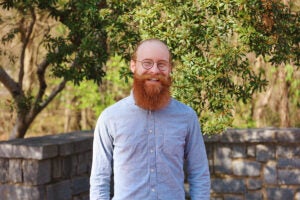
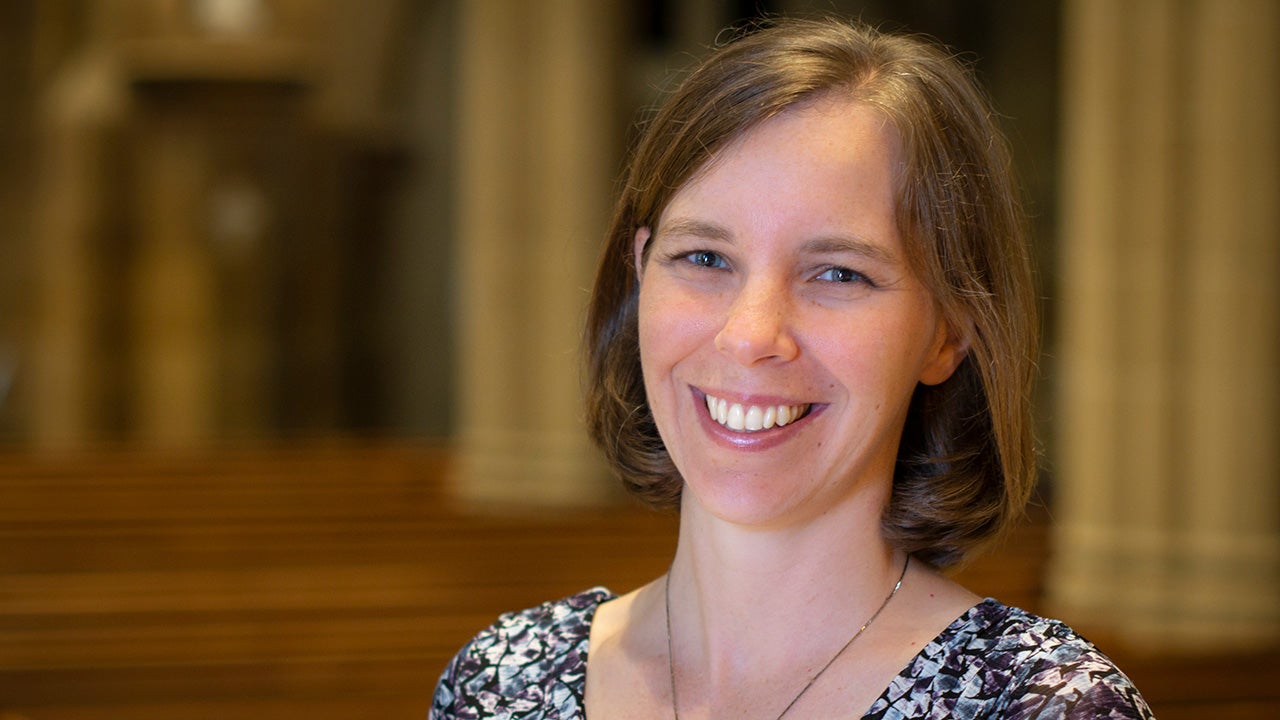
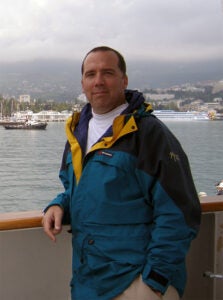
David Hecht

David Hecht

The Young Alumni Award was established in 2003 and recognizes outstanding achievements of Luther alumni in their vocation or avocation who have graduated in the last 15 years. Each year an alum is presented with the award at Commencement.

“We are excited to honor David with the Young Alumni Award and welcome him back to campus to address the graduating class as they begin a new chapter as Luther alumni,” said Luther College President Brad Chamberlain. “Hearing from our Young Alumni Award recipient provides our newest graduates with a tangible example of how a Luther education inspires and equips students to courageously serve the common good, and how together we may catalyze the creation of a more just and sustainable world.”

A native of La Crosse, Wisconsin, Hecht graduated from Luther in 2011. Presently, he works with Marine Extension and Georgia Sea Grant at the University of Georgia. He lives in Athens, Georgia, with his wife, Abby Sterling, Ph.D., and their son, Orren.

Before joining the University of Georgia, Hecht worked as a social scientist with the National Park Service’s Natural Resource Stewardship and Science Directorate. He has worked with other government agencies including the U.S. Fish and Wildlife Service and the U.S. Geological Survey. He has also worked with nongovernmental organizations, including The Nature Conservancy and the International Crane Foundation.

Starting in 2014, Hecht partnered with the Royal Society for the Protection of Nature in Bhutan as a researcher and project coordinator on community-based conservation initiatives for threatened and endangered bird species. His research and experiences have been featured in “Langscape Magazine,” “Current Conservation” and “Himalaya.”

Since 2016, Hecht has been a National Geographic Explorer with a commitment to “integrative and creative inquiry, weaving together different knowledge systems, ways of knowing and methodological tools from the arts and sciences to navigate and engage with the challenges of conservation in dynamic and often contested landscapes.”

He has served as a board member with the International Society of Ethnobiology and an associate editor of the “Journal of Ethnobiology” and “Journey of Human Ecology.” He is a member of the Social Science Working Group with the Society of Conservation Biology and the Conservation Social Science Partnership.
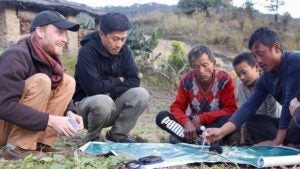
David Hecht (left) and Jigme Tshering with the Royal Society for the Protection of Nature engage in participatory mapping with community partners in Trashi Yangtse, Bhutan.

David Hecht (left) and Jigme Tshering with the Royal Society for the Protection of Nature engage in participatory mapping with community partners in Trashi Yangtse, Bhutan.

In 2011, Hecht graduated magna cum laude with bachelor’s degrees in anthropology and biology from Luther College.

While at Luther, Hecht was involved on and off campus as a member of the student-led Environmental Concerns Organization and a student worker with the Center for Sustainable Communities. He was deeply impacted by his work and mentorship at the Decorah-based nonprofit, Raptor Resource Project, in managing the Decorah eagle camera in 2011, and peregrine falcon nest site maintenance and banding in the Driftless Area.

Hecht earned a Ph.D. in integrative conservation and anthropology from the University of Georgia in 2022. He also holds graduate certificates in nonprofit management and leadership, and conservation ecology and sustainable development from Georgia.
inside the control room of a college campus radio station

As one of the oldest operating radio stations in Iowa, KWLC serves as a professional environment for Luther students to gain broadcasting experience.

April 22 2026
Dr. Michael Osterholm

The lecture, titled “Public Health in Crisis: What This Means to You,” will start at 7 p.m. on Wednesday, April 15, in the Center for Faith and Life Main Hall.

March 16 2026
Source link

Dan Davis to lead underwater survey of ancient Roman harbor in Greece

Dan Davis, associate professor of classics at Luther College, will embark for Greece this summer to direct the underwater excavation of a Roman harbor town that has sat on the seafloor for more than 1,600 years.

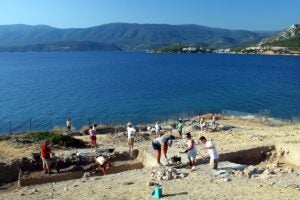
archaeological specialists conduct a large-scale excavation of the ancient Roman town of Kenchreai in Greece.

A team of Vanderbilt University students, staff, and faculty work alongside archaeological specialists to conduct a large-scale international excavation of the ancient Roman town of Kenchreai in the western Aegean Sea in Greece. Luther students will join this project in May 2026.

Six Luther students will join Davis for the four-week summer program. These students will work alongside 50 college students from six U.S. colleges and universities. They will have the unique opportunity to practice using state-of-the-art technologies in a program that combines intensive exploration on both land and sea. The summer program runs from May 22 to June 21.

“The classroom is good at building knowledge, but it cannot teach hands-on problem-solving,” Davis said. “There is a moment on every project where a student faces a problem and they have to figure out a solution. That’s when you see the students realize what they are capable of. That is the part I love most about taking students into the field.”

The Kenchreai Coastal and Marine Survey is a three-year archaeological campaign of the ancient harbor of Kenchreai, located near the ruins of Corinth in Greece. Davis will serve as underwater field director alongside project director Joseph Rife, associate professor of classical and Mediterranean studies at Vanderbilt University in Nashville, Tennessee.

“At its heart, the Kenchreai Coastal and Marine Survey is exploring a lost Roman harbor town that is now sitting underwater,” Davis said. “Whole buildings, moles and all the infrastructure of a functioning Roman port have been sitting beneath the surface for centuries. We believe there is quite a lot down there that has never been explored or documented.”

The Luther students joining the expedition on land are Zoey Evans ’27, Kira McCracken ’28, Katelyn Wilson ’28, Lauren Conner-Dieter ’26 and Louis Breimhurst ’27. In the field, they will gain experience in excavation, survey, artifact documentation and analysis, drone operation and geographic information systems. Benson Newhouse ’27 will join the team for the underwater fieldwork. Some of the students will earn credit through Luther’s Experiential Learning requirement during their four weeks in Greece.

Conner-Dieter, of Madison, Wisconsin, is excited to gain field experience this summer.

“I hope to learn how large-scale excavations take place and use the skills I learned from Luther’s anthropology program in actuality,” she said. “I am majoring in anthropology with an interest in archaeology, while also having academic interest in classical studies. This project includes both of these topics. I have not had as much field experience as I would have liked in archaeological excavations and this will provide me with a great start to my career.”

The underwater team will use a combination of underwater photogrammetry, sonar and magnetometry to map the site before excavation begins. An autonomous underwater vehicle will conduct a full survey of the harbor, with students trained in mission planning and data analysis.

Luther College Professor Dan Davis is standing on a ship.

Luther College Professor Dan Davis stands aboard the research ship Endeavor in the Black Sea on Oct. 18, 2012. Davis will serve as an underwater field director for a three-year archaeological campaign in Greece starting in May 2026.

On land, the team will use a light detection and ranging drone and ground-penetrating radar to locate and capture accurate data on buried structures without disturbing the ground. The collected data will be used to produce a 3D replica of the submerged harbor that researchers can study long after the season ends.

Kenchreai served as the eastern gateway to Corinth, one of the most powerful cities in the ancient world. Ships from Egypt, Asia Minor and Cyprus would arrive at the harbor and unload their goods into warehouses along the waterfront. Some travelers would stay in the harbor town while others walked nearly six miles inland to the city.

“The town as we know it was founded by the veteran legions of Julius Caesar. For centuries it was a wealthy, internationally connected community,” Davis said.

Around 370 A.D., a massive earthquake sent the entire harbor infrastructure straight to the seafloor in a single event. The breakwaters, warehouses, temples and public buildings all sank together.

“The structures remain well preserved and will help tell the story of this important node in the Roman empire’s vast maritime network,” Davis said. “Every time someone has looked seriously at this site, they have found something extraordinary.”

The Kenchreai Coastal and Marine Survey operates under a permit through the American School of Classical Studies at Athens. The Explorers Club, of which Davis is a fellow, has recognized it as an official Explorers Club Flag project.

Davis, a faculty member at Luther since 2011, holds the Orlando W. Qualley chair of classics and manages the classical studies minor within the history department.

Source link

KWLC celebrates 100 years of broadcasting

Luther College’s campus radio station, KWLC 1240 AM, will celebrate a century of campus broadcasting with an anniversary block party from 6-10 p.m. on Friday, April 24, at Bentdahl Commons.

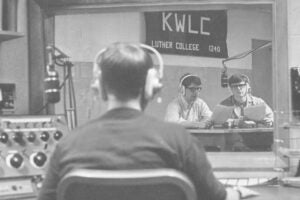
inside the control room of a college campus radio station

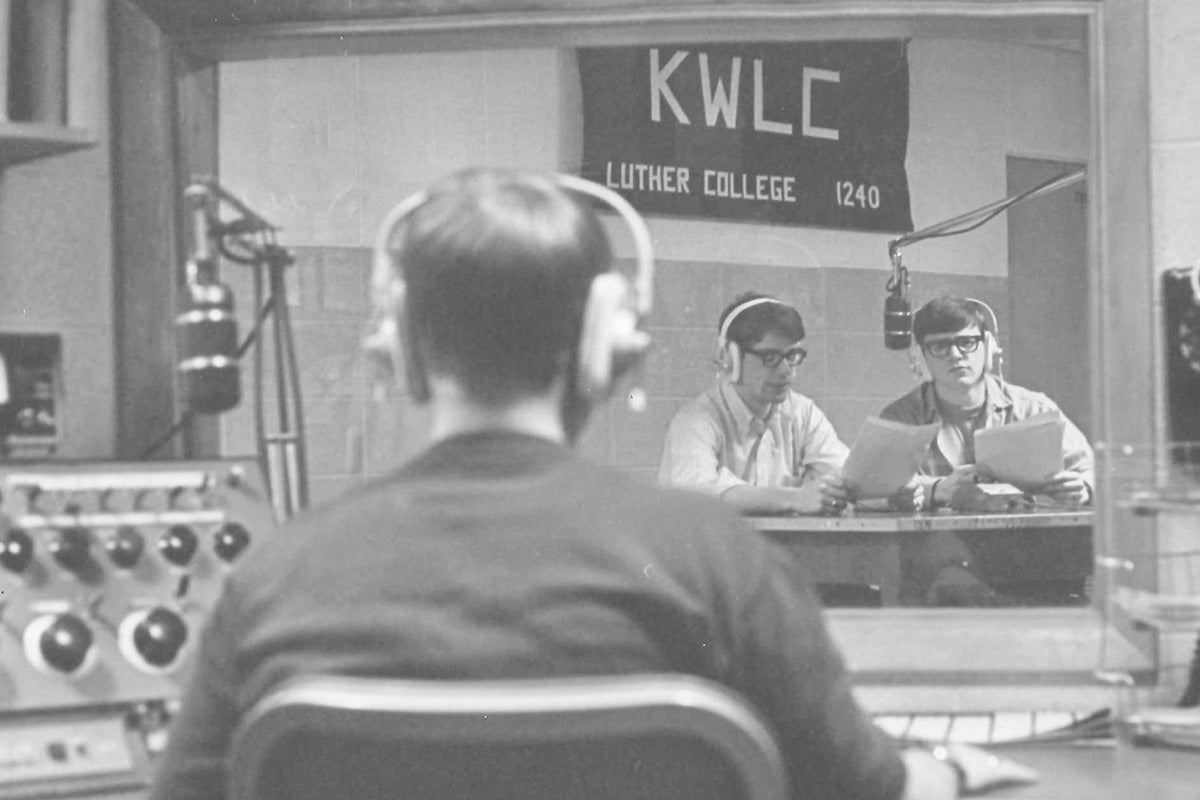
In this photo featured in the 1969 Pioneer yearbook, Bob Nus and Jon Nelson await their cue from the control room at KWLC. Photo courtesy of Luther College Archives.

As one of the oldest operating radio stations in Iowa, KWLC serves as a creative platform for amplifying student voices and a professional environment for Luther students to gain broadcasting experience.

“It is impressive that Luther College has had a radio presence for 100 years in northeast Iowa,” said Jay Raabe, administrative advisor for KWLC. “Owning a radio FCC license is a significant responsibility and I am continually impressed by the professionalism and positivity of the current student team at KWLC.”

On Dec. 18, 1926, KWLC had its inaugural broadcast when Luther College President Oscar L. Olson read U.S. President Abraham Lincoln’s Gettysburg Address. While early programming aired only a few times a week, the station expanded to daily broadcasts in the 1930s and has remained a consistent presence on campus ever since.

In 2025, KWLC was restructured as a student organization, with student leaders not only providing the programming but also operating and maintaining the station for the first time. The station offers students the opportunity to host shows, explore music, report on campus life, and develop professional skills.

Many Luther alumni who worked at KWLC as college students have gone on to successful careers in radio and media, including positions at Minnesota Public Radio. Notable KWLC alumni include Mike Danforth ’95, executive producer of the show, “Wait Wait…Don’t Tell Me!” on National Public Radio, and Mike Grimm ’93, who has been the “voice of the Gophers” for the University of Minnesota men’s basketball since 2006 and for football since 2011. 

The station is currently led by a team of student officers, including station manager Lindsey Moseley ’26, communications and outreach coordinator Jeanette Pelletier ’26, social media manager David Hinderaker ’27, and treasurer Alex Burdzy ’28.

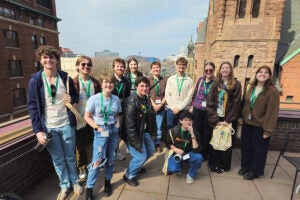
a group of 12 college students take a photo from the roof of Minnesota Public Radio offices in St. Paul, Minnesota

KWLC student DJs and Chips writers had the opportunity to visit Minnesota Public Radio on March 5, 2026, in St. Paul, Minnesota. During their tour, Luther students met with Lindsay Kimball, a Luther College class of 2005 graduate. Kimball is the program director for “The Current.”

“I have really enjoyed being a part of KWLC,” Pelletier said. “I have especially enjoyed working with my peers and faculty to plan the 100-year anniversary block party on April 24. KWLC has always had a tradition of fronting student expression, so it was only a matter of time before our block parties came back. I hope this 100-year celebration of KWLC will remind folks of the alternative means of entertainment and creative expression on campus.”

For KWLC DJs and their listeners, the 100-year anniversary is more than a milestone; it’s a celebration of the voices and stories that have shaped the station for generations. KWLC’s anniversary block party will feature live music from Stonewalker and Grandma’s Banjo, Sugar Bowl ice cream, and lawn games. 

“This event is a celebration of the past, but also an opportunity to recruit the next crew to share good tunes and thoughtful interviews across our campus community. Please bring a blanket and your friends for a fun evening,” Raabe said.

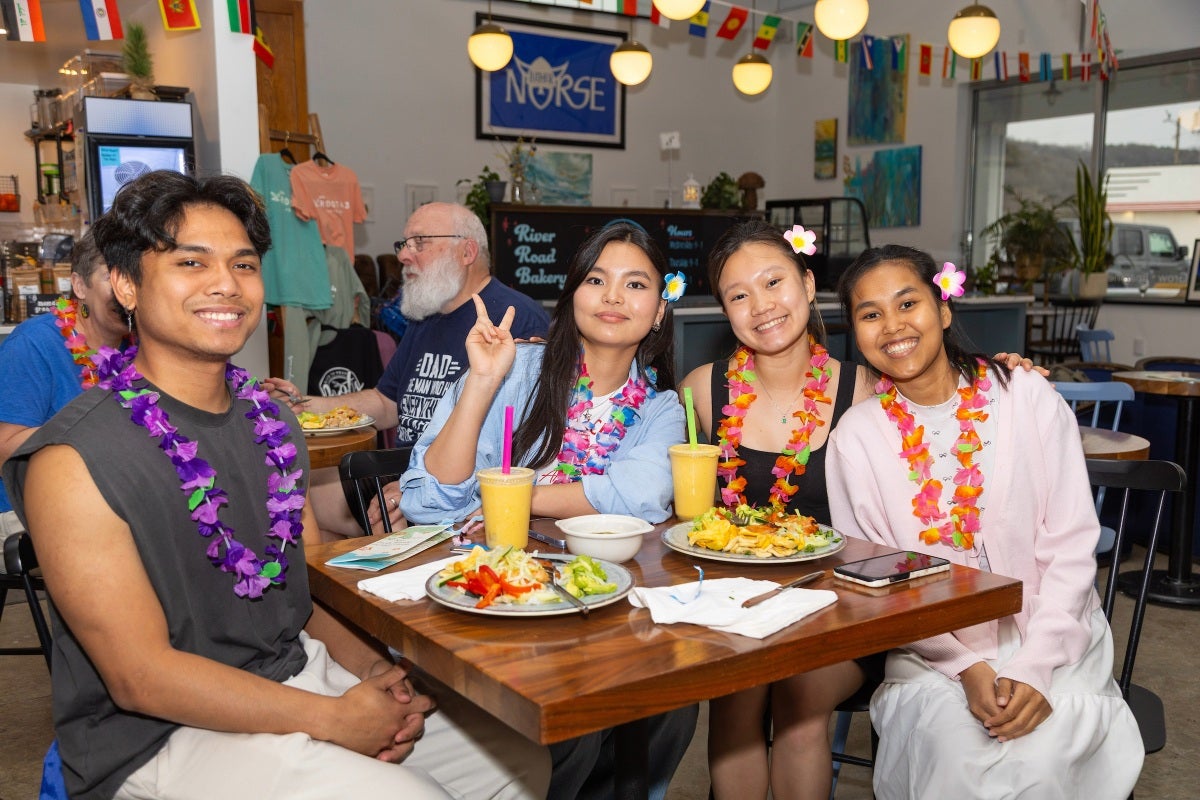
Students wearing leis eat a colorful meal at the Landing Market.

“From student-led cultural events to our keynote on Hmong history and immigration, each gathering invites us to learn, reflect and celebrate together,” said the Asian Students and Allies Association executive team.

April 9 2026

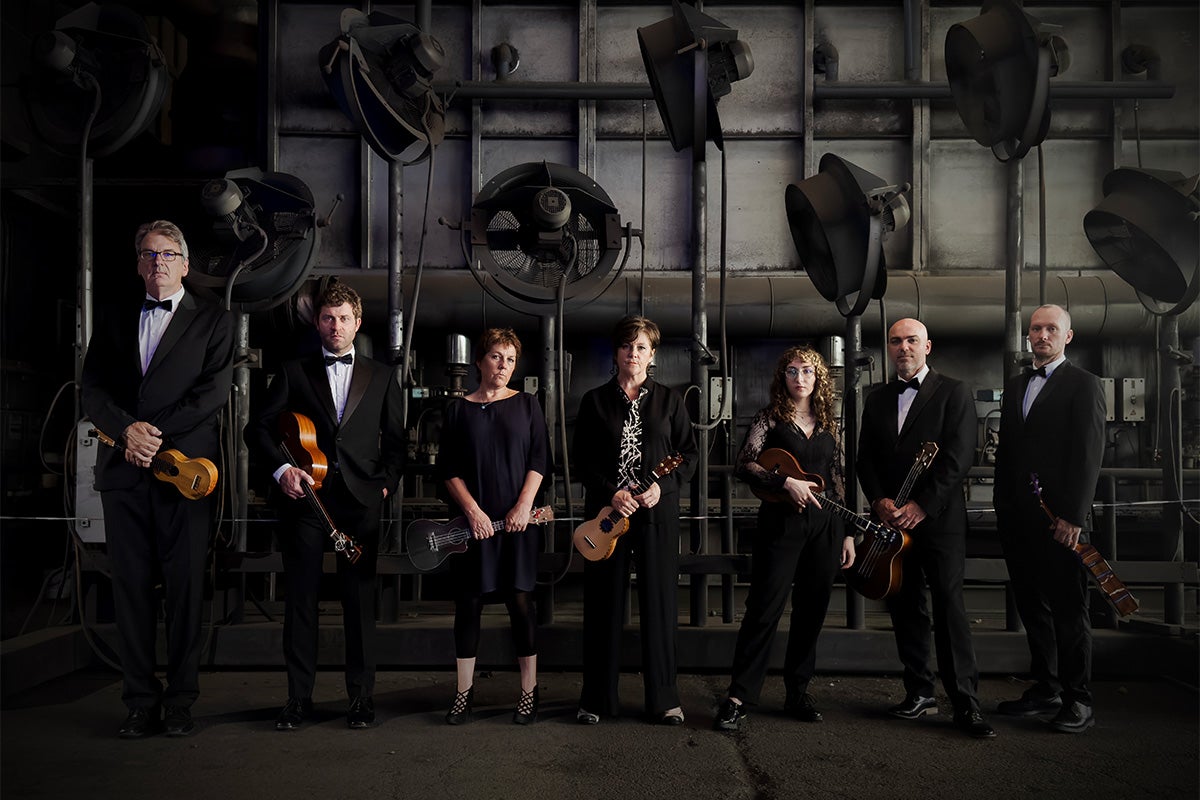
seven ukulele musicians stand for a promotional photo inside a dark room

The ensemble uses only ukuleles and vocals to create a technically impressive and highly entertaining performance.

April 7 2026

Source link

Luther College hosts events to highlight identities and experiences of Asian Americans and Pacific Islanders

Luther College will celebrate Asian American and Pacific Islander (AAPI) heritage month in April with lectures and events to showcase the breadth and depth of AAPI experiences. The events are open to the public.

professional headshot of a woman wearing a red and blue patterned blouse and a black jacket.

Mai Na M. Lee

“From student-led cultural events to our keynote on Hmong history and immigration, each gathering invites us to learn, reflect and celebrate together,” said the Asian Students and Allies Association (ASAA) executive team at Luther College. “We hope you will join us to honor AAPI stories, challenge ourselves to think more critically about identity and justice, and build a more inclusive community here in Decorah.”

Mai Na M. Lee, an associate professor of history and Asian American studies at the University of Minnesota, is the keynote speaker for AAPI heritage month.

Her lecture, “Subverting the Blood Sacrifice Narrative: How the Hmong Arrived in the Midwest and Became Targets of ICE Arrest and Deportation,” starts at 7 p.m. on Wednesday, April 29 in the Center for Faith and Life Recital Hall.

This lecture provides the background for the U.S. activities in Southeast Asia that displaced the Hmong into the United States, with emphasis on their resettlement in the Midwest. The talk also set the grounds for examining why the Hmong have become targets of Immigration and Customs Enforcement (ICE) arrest and deportation efforts in Minnesota during the last year.

Brian Caton, associate professor of history at Luther College, explained how this topic is relevant to Decorah residents.

“Decorah was one of the destinations for Hmong and other Southeast Asian refugees arriving in the 1970s. Many Decorah families hosted refugee families; local churches provided space for English as a Second Language (ESL) classes and other forms of logistical support; and some of the land along Pulpit Rock Road was given to refugee families to raise their own crops,” Caton said. “Most of these families relocated away from Decorah after a few years, many to the Twin Cities, where their racial identity makes them a target for ICE arrests, regardless of their citizenship status. Though many Decorah residents have arrived here long after refugee families left, we all know people who invested a great deal of their time and material resources to ensure the survival, adjustment and citizenship of Hmong and Southeast Asian people, which ICE seems to regard as a wasted effort.”

Decorah residents are also invited to the Cultural Community Connection event starting at 5 p.m. on Tuesday, April 14 at The Landing Market, 211 College Drive. ASAA members will serve a Pacific Islander-themed bowl of grilled chicken, pineapple, and green peppers on rice and dried fruit chips. The cost is $10 per person, or for students (with ID) attending any college or university and for children 17 and younger, the cost is $5. No reservations are needed.

A fashion show starts at 5:30 p.m. The Cultural Community Connection is sponsored by ASAA and the Center for Intercultural Engagement and Support.

While May is widely recognized as national AAPI month, Luther celebrates in April before the conclusion of the college’s academic year.

seven ukulele musicians stand for a promotional photo inside a dark room

The ensemble uses only ukuleles and vocals to create a technically impressive and highly entertaining performance.

April 7 2026

Dr. Michael Osterholm

The lecture, titled “Public Health in Crisis: What This Means to You,” will start at 7 p.m. on Wednesday, April 15, in the Center for Faith and Life Main Hall.

March 16 2026
Source link

Ukulele Orchestra of Great Britain to perform April 17

seven ukulele musicians stand for a promotional photo inside a dark room

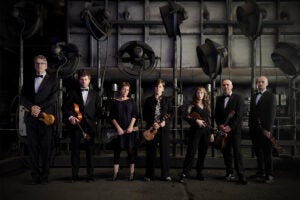
After 40 years, the Ukulele Orchestra of Great Britain are still thrilling audiences with their all-singing, all-strumming, full throttle, foot-stomping concerts. (photo credit: Leisa Rea/Viola Farrington)

Known for their high-energy performances, the Ukulele Orchestra of Great Britain will bring their internationally acclaimed show to Decorah at 7:30 p.m. on Friday, April 17, in the Center for Faith and Life Main Hall.

Performing everything from classical works to rock and pop favorites, the ensemble uses only ukuleles and vocals to create a technically impressive and highly entertaining performance.

“Celebrate the start of an April weekend in Decorah by spending a few hours at the CFL on Friday, April 17, with the Ukulele Orchestra of Great Britain,” said Susan Potvin, director of programming and outreach. “Their selections will range from ABBA to ZZ Top, Tchaikovsky to Nirvana, bluegrass to Broadway, so I’m confident every person in attendance will find something enjoyable about the experience.”

Tickets for the performance can be purchased at tickets.luther.edu or at the Luther Ticket Office in the Center for Faith and Life. Contact the ticket office at tickets@luther.edu or 563-387-1357 for more information.

The lighthearted ensemble brings more than 40 years of musical experience to the stage. Formed in 1985 initially as a one-off project, the Ukulele Orchestra of Great Britain has earned a global following for its witty stage presence and genre-bucking way of defying expectations.

The ensemble previously performed at Luther College in 2013 and 2019.

The ensemble’s 2026 touring line-up features Peter Brooke Turner on soprano ukulele, Ben Hales on baritone ukulele, Ben Rouse and Laura Currie on tenor ukuleles, Leisa Rea on concert and sopranino ukuleles, Guy Hargreaves on concert ukulele, and Laurie Higgins on bass ukulele. Though the group uses the word “orchestra” in its name, it is not a formal, traditional ensemble, but rather a group of seven musicians performing a wide variety of familiar songs across genres with humor and personality.

Before the performance, treat yourself to dinner starting at 5:30 p.m. in the Peace Dining Room at the Dahl Centennial Union. The cost is $33 per person.

The meal begins with black mission fig compote topped with fresh mozzarella and spread on a crispy crostini. The main entree is a slice of roasted stuffed pork loin with caramelized onions, spinach, dates and orange zest served with whipped sweet potato and caramelized fennel with parsley. Dark chocolate trifle is the featured dessert.

Dietary accommodations are available upon request.

Bar service will be available in the lobby during the scheduled 20-minute intermission.

Dr. Michael Osterholm

The lecture, titled “Public Health in Crisis: What This Means to You,” will start at 7 p.m. on Wednesday, April 15, in the Center for Faith and Life Main Hall.

March 16 2026
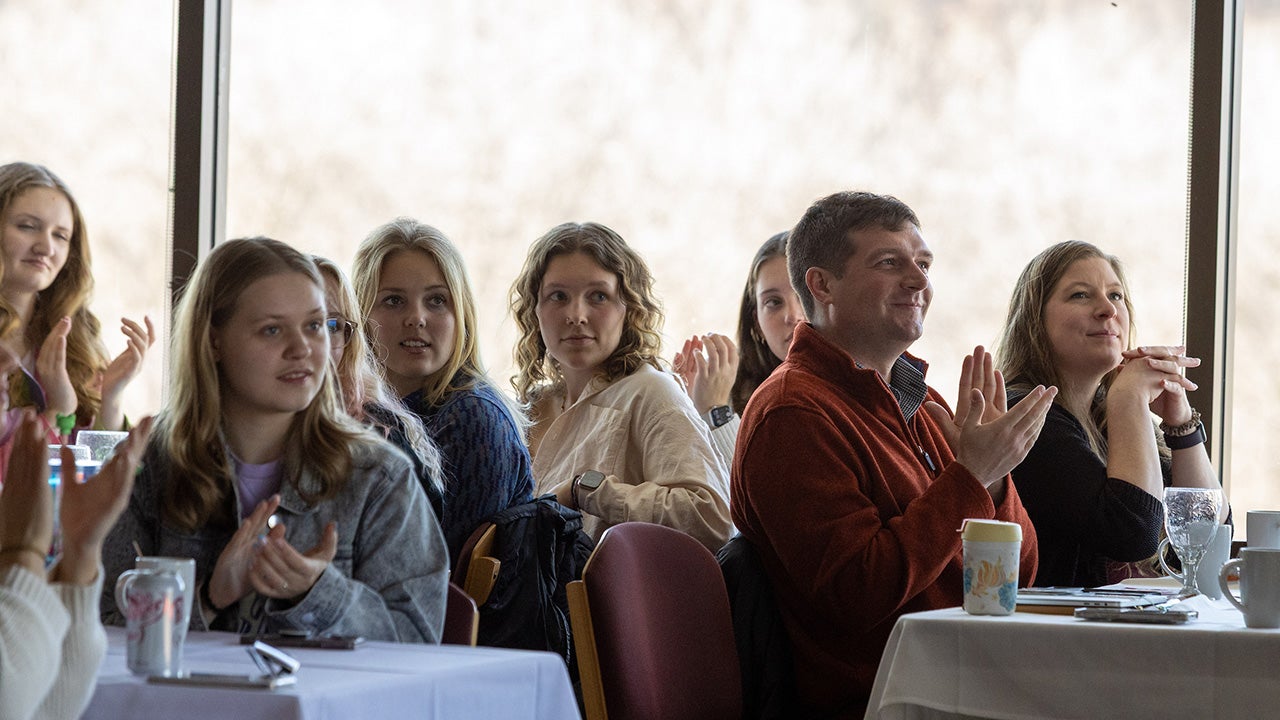
people listen to a speaker at a luncheon

“March is a time to reflect on women’s history and accomplishments,” said Char Kunkel, head of the Identity Studies Department at Luther College.

March 3 2026

Luther College Ticket Office

Ticket Office Hours:
Monday-Friday 9 a.m. – 4 p.m.
Thursday 9 a.m. – 7 p.m.

Show Day Hours:
9 a.m. – performance
Saturdays 1 p.m. – performance

Mail:
Luther College Ticket Office
Center for Faith & Life
700 College Dr
Decorah, Iowa 52101

tickets@luther.edu


Phone: 563-387-1357

Source link

Chemistry professor publishes interdisciplinary biophysical chemistry textbook with the Royal Society of Chemistry

John R. Jefferson, professor of chemistry at Luther College, authored “Introduction to Biophysical Chemistry: An Interdisciplinary Approach,” a 338-page textbook that bridges the disciplines of physics, chemistry and biology, and is designed to help college students investigate some of the big unanswered questions in biology.

“Textbooks typically focus on teaching primarily what we already understand,” Jefferson said. “This book tries to help students identify the things we don’t understand and use what we do know to go after the explanations. It teaches you how to think about the big questions.”

What makes “Introduction to Biophysical Chemistry: An Interdisciplinary Approach” stand out is its interdisciplinary spiral approach. Instead of covering physics, chemistry and biology as separate sections, the book cycles through each discipline at progressively higher levels. The structure, reflected in the spiral on the book’s cover, helps students to see the connections across fields rather than staying confined to one discipline.

“Traditional books tend to stay within one discipline the whole way through,” Jefferson said. “Students from the physics side would stay in physics and not get involved with the other disciplines. The goal was to make it interdisciplinary, so that as you learn the advanced topics, you’re always looking for ways to overlap the physics, the chemistry and the biology.”

A Spiral Approach to the Big Questions of Science

The textbook is organized into three parts. The first part reviews the subdisciplines, including physics, physical chemistry, organic chemistry, biochemistry, cell biology and recombinant technology. The second part covers experimental methods with highlighted advanced applications such as spectroscopy, microscopy, separation methods, mass spectrometry and nuclear magnetic resonance.

The third part is what Jefferson considers the heart of the book: the big unanswered questions in the field. These include questions about protein structure and function (proteomics), the role of intracellular organelles and membranes, the process of aging and disease, the origin of life and evolution, and brain function and development. These are the questions that Jefferson believes will be the focus for our next generation of scientists.

Each chapter ends with what Jefferson calls thought-provoking questions. These are not typical exercises with a single correct answer. The questions are open-ended and designed to lead students into a deeper investigation. Every question is paired with web-linked references that are free, publicly accessible articles.

“Other textbooks ask you questions that you can answer,” Jefferson said. “These questions ask you to think.”

Travel Informs the Textbook’s Writing

The project began when Jefferson reached out to the Royal Society of Chemistry to inquire about a biophysical chemistry book that is currently out of print. Jefferson offered to help update the textbook. The publisher invited him to write an entirely new textbook instead.

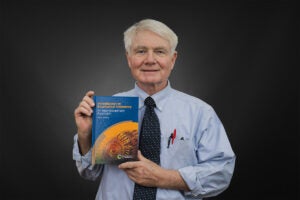
Chemistry professor John R. Jefferon holds a copy of the interdisciplinary biophysical chemistry textbook written by him.

John R. Jefferson, professor of chemistry at Luther College, authored “Introduction to Biophysical Chemistry: An Interdisciplinary Approach,” a textbook that bridges the disciplines of physics, chemistry and biology.

In 2023, Jefferson started to write the textbook during a sabbatical funded in part by the Doris and Ragnvald Ylvisaker Endowment for Faculty Growth. Jefferson and his wife, Marion Pruitt-Jefferson, spent four months living in an RV while traveling across the western United States. Jefferson visited four institutions teaching similar courses in biophysical chemistry: Lewis and Clark College in Portland, Oregon; Oregon State University in Corvallis, Oregon; Colorado College in Colorado Springs, Colorado; and the University of Arizona in Tucson, Arizona.

At each institution, faculty provided Jefferson with feedback. The message Jefferson heard repeatedly was that students and researchers tend to stay within their own discipline, missing the chance to address bigger questions. For example, an analytical chemist told him that using biological systems merely to improve analytical techniques is a missed opportunity.

Jefferson tested his new interdisciplinary approach in a seminar at Colorado College. The response was so enthusiastic that students stayed more than an hour to ask questions.

Students Engage with the Textbook

Jefferson said one particularly rewarding part of writing the book here at Luther was watching Luther students engage with the open-ended questions. Some students created posters, others designed group activities, and one class turned the questions into full presentations.

“The book was possible because of the interchange between professors and students in different disciplines,” Jefferson said. “It is the process of first teaching the basics, and then encouraging the students to take the next step. That’s what a liberal arts institution like Luther gives you.”

When asked what he hopes a student takes away from the book, Jefferson’s answer was clear: that an interdisciplinary approach is the key to addressing the biggest questions in science.
Jefferson has been a faculty member within Luther’s chemistry department since 1991. He holds a bachelor’s degree from Franklin and Marshall College and a doctorate from the Catholic University of America.

Jefferson’s textbook was written for advanced undergraduate students and first-year graduate students who have studied either chemistry, biology or physics. Published by the Royal Society of Chemistry in 2025, the book is currently used in one of Luther’s advanced chemistry courses.

“Introduction to Biophysical Chemistry: An Interdisciplinary Approach” is available for purchase through the Royal Society of Chemistry at books.rsc.org.

Source link

Jazz Orchestra to take its musical energy south for spring tour

For its 2026 spring tour, the Luther College Jazz Orchestra, one of the premier collegiate instrumental jazz ensembles in the United States, will be traveling to the birthplace of jazz and six other cities starting Saturday, March 21.

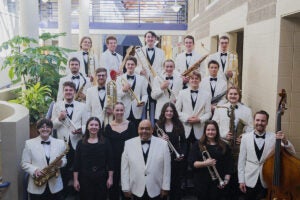
members of the 2025 Jazz Orchestra stand for a group photo

The Jazz Orchestra and their conductor, Juan Tony Guzmán

Whether they’re swinging to the tunes of Duke Ellington and Count Basie, making a Brazilian samba come alive or simply laying down a heavy funk groove, the Jazz Orchestra and their conductor, Juan Tony Guzmán, are guaranteed to make any space come alive with musical energy.

Their spring tour repertoire includes highlights from Gordon Goodwin, Astor Piazzolla, Marshall Gilkes and Bob Washut.

Students from a variety of academic programs perform with the Jazz Orchestra and will be featured as soloists during the spring tour.

While rest of campus enjoys spring break (March 23-27), the Jazz Orchestra will perform in the following locations:

  • Iowa City, Iowa
  • Collierville, Tenn.
  • New Orleans, La.
  • Lafayette, La.
  • Little Rock, Ark.
  • Topeka, Kan.
  • Johnston, Iowa

The Jazz Orchestra will return to Decorah for a homecoming concert at 7:30 p.m. on Tuesday, March 31 at the Center for Faith and Life Main Hall.

The concerts are free and open to the public.

Syracuse University organist Anne Laver

Laver’s program will sample an “eclectic collection of pieces that explore the art of variation, from Bach’s monumental Passacaglia and Fugue to more modern expressions of the genre.”

February 9 2026

Nordic Choir singers perform

“Nordic Choir has an exciting program to share with audiences from Iowa City to Orlando,” said Andrew Last, associate professor of music and director of choral activities.

January 30 2026

Source link

Influential health leader Dr. Michael Osterholm to address ‘public health in crisis’ at Roslien Distinguished Lecture on April 15

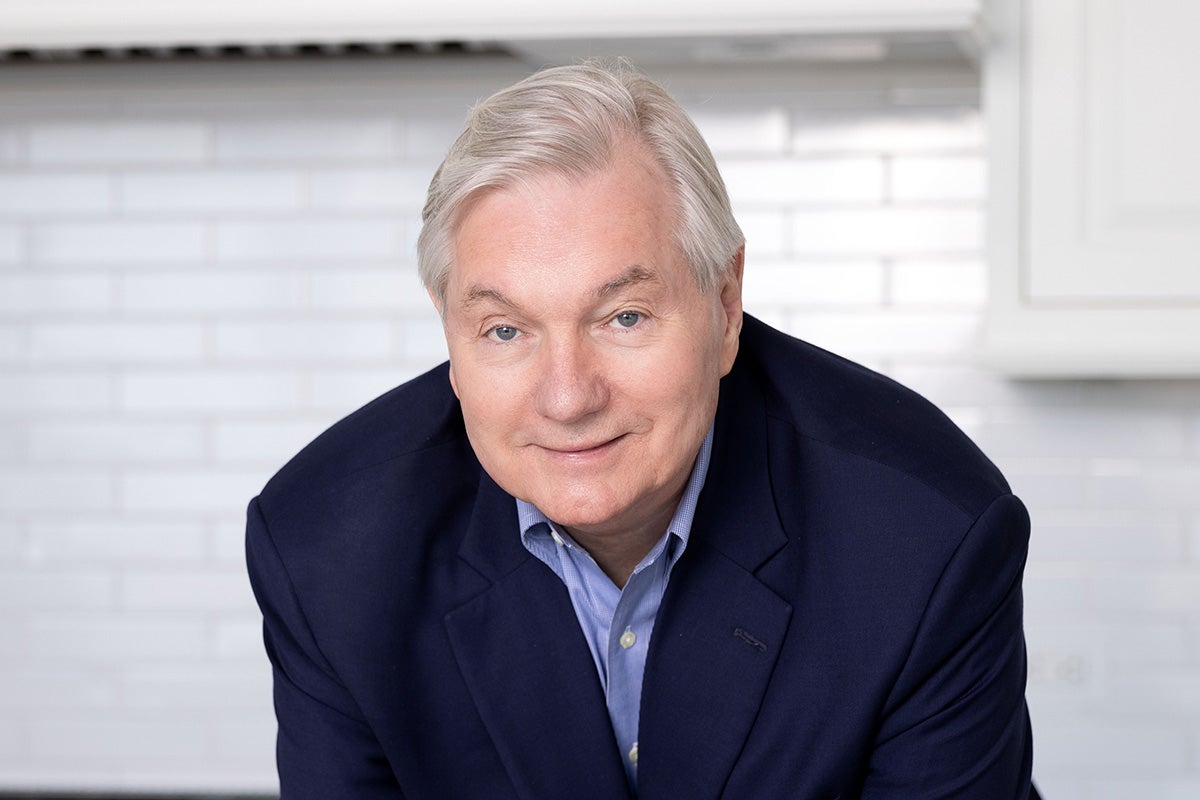
Dr. Michael Osterholm, who was recently named as one of the world’s “most influential leaders in health” by Time magazine, will discuss concerns surrounding the current status of public health in the world and what he recommends we do to address this crisis at the Dr. David J. Roslien Distinguished Lecture in Science and Leadership. The lecture titled “Public Health in Crisis: What This Means to You” will start at 7 p.m. on Wednesday, April 15, in the Center for Faith and Life Main Hall on Luther College’s campus. The lecture is free and open to the public.

Dr. Michael Osterholm

Dr. Michael Osterholm

This year’s Roslien Distinguished Lecture will be a conversational fireside chat format with Osterholm answering questions posed by Dr. Mark Larson, medical director of Mayo Clinic Care Network. Larson graduated from Luther in 1978 and he currently serves on the Luther College Board of Regents with Osterholm.

“In the past year, we have seen significant changes to public health leadership and policies, and this lecture will deliver a powerful and precise analysis of how these changes are already shaping our lives,” said Andy Hageman, director of the Center for Ethics and Public Engagement and a professor of English. “Dr. Osterholm is uniquely positioned to shed light on multiple aspects of public health changes, from government agency approaches to scientific research to vaccine attitudes, policies and trends.”

Osterholm, a 1975 Luther College graduate, holds many roles at the University of Minnesota. Currently, Osterholm is a regents professor, McKnight Presidential Endowed Chair in Public Health, the director of the Center for Infectious Disease Research and Policy (CIDRAP), Distinguished Teaching Professor in the Division of Environmental Health Sciences, School of Public Health, a professor in the Technological Leadership Institute, College of Science and Engineering, and an adjunct professor in the medical school.

In 2025, Osterholm and colleagues founded the Vaccine Integrity Project, a key initiative dedicated to safeguarding vaccine use in the United States. Osterholm is the author of three books, and he will highlight the findings detailed in his 2025 book, “The Big One: How We Must Prepare for Future Deadly Pandemics,” at the Roslien Distinguished Lecture.

“If you want to get a revered insider perspective on what is happening in the U.S. Department of Health and Human Services and the Centers for Disease Control and why it matters to you and your family, community, and country, you won’t want to miss this lecture,” added Hageman.

The lecture will be livestreamed on Luther College’s YouTube channel.

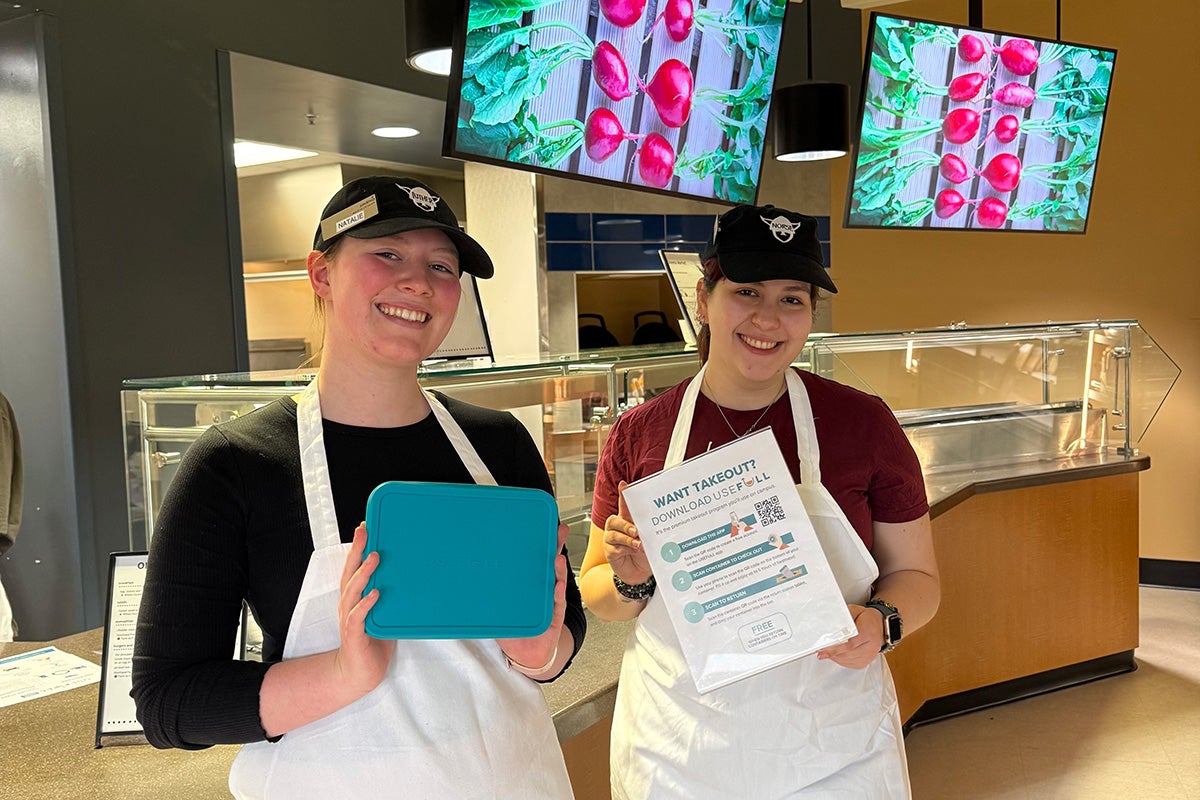
dining service workers hold up a stainless steel container at Oneota Market

Luther is the first campus in Iowa to launch plastic-free takeout with USEFULL. 

March 12 2026

Bell between two stone columns with sign above that says "Luther College."

Of the winter graduating class, 19% were first-generation college students, 15.9% were international students and 11.1% were transfer students.

March 11 2026

Source link

Luther College launches reusable takeout program with USEFULL

Luther College is taking a major step toward zero-waste by partnering with USEFULL to provide a tech-enabled stainless steel container reuse program for takeout orders at Oneota Market inside the Dahl Centennial Union.

Luther College students stand next to a sign encouraging students to download the USEFULL app

Luther College students check out durable stainless steel containers through a new partnership with USEFULL.

USEFULL’s system uses durable stainless steel containers with silicone lids to keep meals hot or cold for hours, providing students with a premium dining experience while eliminating reliance on plastic and short-life reusables. Its technology platform includes container tracking, automatic return reminders, and performance reporting at both the institutional and individual level.

“This partnership reflects our community’s core values around sustainability and care for the environment,” said Kara Holmstrom, Luther’s sustainability coordinator. “USEFULL is helping us build a healthier and more responsible campus dining culture, while reducing waste and ensuring flexibility for our students who want to take food on-the-go.”

The program debuted on Tuesday, Feb. 10, and since then, students have been checking out USEFULL containers and integrating sustainability into their daily dining routines. Reuse is growing in retail dining on campus, and this is a step forward for Luther to eliminate plastic from its waste streams, one small part of the college’s goal of being a carbon neutral institution by 2030.

“Reducing waste is one important piece of our larger effort to incorporate sustainability into all aspects of our campus operations and culture,” said Jon Jensen, director of Luther’s Center for Sustainable Communities. “The great thing about this program is that it is also giving students an enhanced experience when they eat on the go.”

In partnership with Bon Appétit Management Company, Luther is the first college in the state of Iowa to partner with USEFULL.

“Luther College is part of a real movement to rethink campus waste and do reuse right,” said Alison Cove, founder and CEO of USEFULL. “We’re proud to support the college’s commitment to long-term sustainability with a reuse system that students and dining teams love to use.”

dining service workers hold up a stainless steel container at Oneota Market

Luther College is the first college in Iowa to partner with USEFULL for a reusable takeout program.

The program is free to students, faculty and staff with minor fees applied only to containers returned after the two-day usage period or unreturned containers.

“It’s like checking out a library book, but for reusable containers,” Jensen said.

The reusable takeout program integrates with other sustainability practices at Luther including Cafeteria to Community and food composting efforts. Through the Cafeteria to Community program, Luther students and volunteers work together to package and label food that is provided to four northeast Iowa facilities: Open Hands Food Pantry, Northeast Iowa Community Action, Decorah Food Pantry and Midwest Mission Bible Training Center. Each facility ensures that individuals and families receive nutritious meals at no cost.

Bell between two stone columns with sign above that says "Luther College."

Of the winter graduating class, 19% were first-generation college students, 15.9% were international students and 11.1% were transfer students.

March 11 2026

two students hold up thank you cards

“At Luther, we know that the future is shaped by those who believe in it,” said Luther College President Brad Chamberlain.

March 6 2026

Source link

1 … 3 4 5 6 7 … 22